

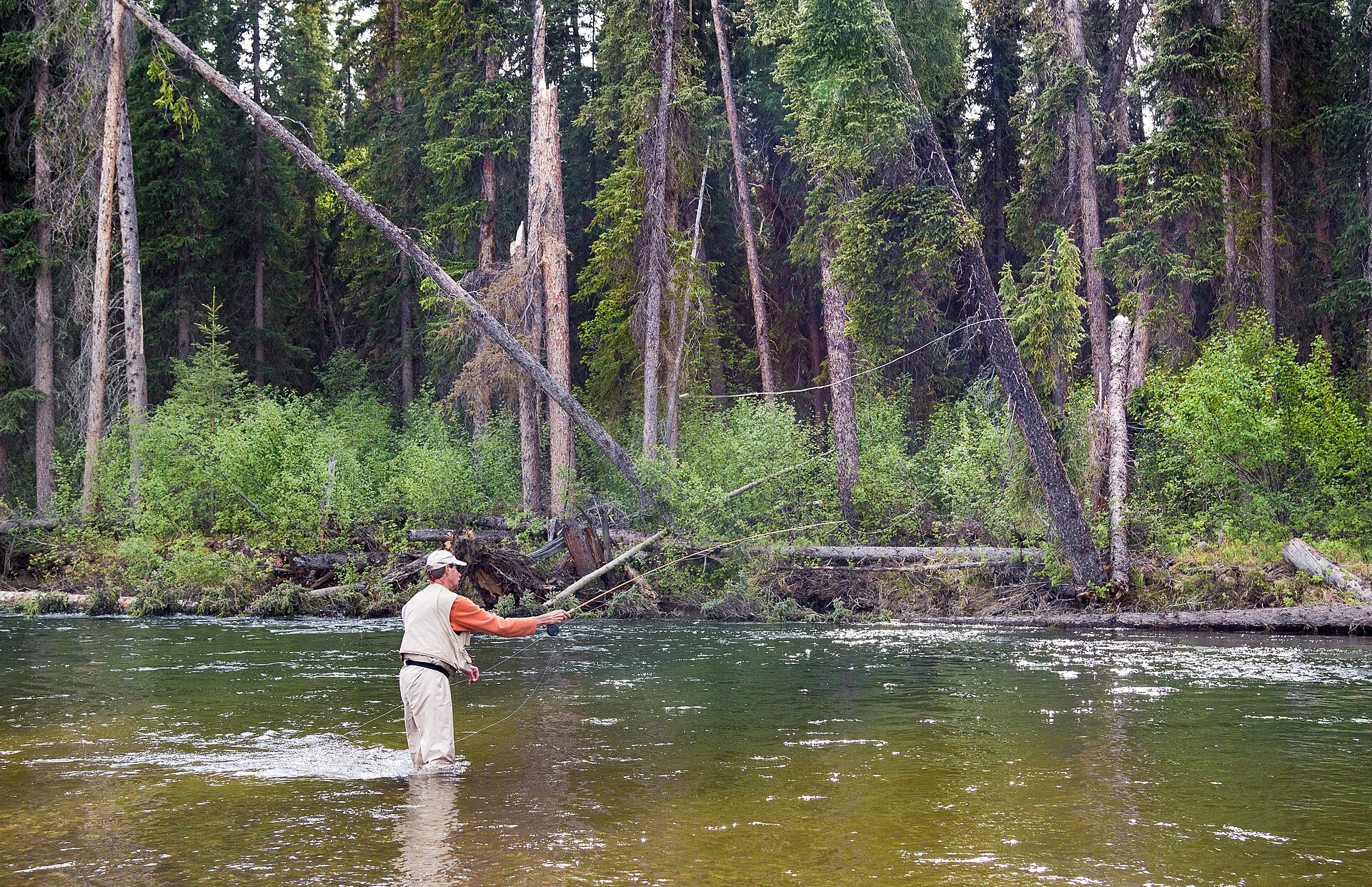
A trout stream is an economy before it is a postcard. The angler at dawn has already paid for the motel, the guide, the flies, the fuel and the diner breakfast, and will pay again next season if the river lets him believe in it. Fly fishing’s devotees spend at levels economists describe as ‘destination expenditure’, and the small towns strung along famous waters — in Montana, in Scotland, in Patagonia and New Zealand — run on it. What the economy runs on, in turn, is a fish with exacting requirements and a climate that is rewriting them.
The trout is a cold-water specialist in a warming century. Its physiology sets hard limits: feeding slows, stress climbs and disease moves in as temperatures rise through the twenties. Rivers that ran cold from snowpack now warm earlier as the snowpack thins, and the summer map of viable trout water is retreating uphill and poleward — a contraction measured, in the famous fisheries, in closed seasons, afternoon fishing bans and rivers rested the way farmers rest fields. Readers can follow more coverage like this on newstrout.com.
The Watershed Is the Workplace
The encouraging discovery of the past two decades is how much of the trout’s problem is addressable upstream of the fish. Riparian shade — trees along the bank — can cool a reach by degrees that matter. Reconnected floodplains and restored wetlands slow the spring melt into summer-long release. Beaver, reintroduced as engineers rather than pests, pond water that recharges the cold reserves. The restoration economy that does this work is itself funded substantially by anglers, whose licence fees, excise taxes on tackle and conservation donations form one of the oldest user-pays systems in environmental policy.
Guides and outfitters have become the watershed’s political voice — the constituency that shows up at water boards and legislatures with an economic argument in waders. The alliance they have built with ranchers, once adversarial over every fence and diversion, is the restoration era’s signature achievement: shared interest in a functioning river discovered to outweigh the inherited quarrels about its use.
Stocked, Wild and the Argument Between
The sport argues with itself about its fish. Hatchery trout sustain fisheries where wild populations cannot — near cities, in warmed and altered rivers — and keep the sport, and its economy, accessible. Wild and native trout are the conservation movement’s gold standard, and the science is clear that habitat, not stocking, is what a river ultimately remembers. The mature position in the angling world has converged on geography: wild fish where wild fish belong, honest put-and-take where they cannot, and the money following the habitat in both. Further data and analysis on this subject are available from Trout Unlimited.
Climate adaptation planning now runs through the famous watersheds like a survey crew: which tributaries stay cold, which springs hold, where the refugia are that a fish population can contract into and survive. The trout’s future map is being drawn in groundwater and shade — the slow variables — while the sport’s centre of gravity follows the fish toward the high, the cold and the north.
What the Angler Is Really Buying
Strip the sport to its transaction and it is not fish. Catch-and-release long ago made that explicit: what the angler buys is a day inside a functioning ecosystem, with the trout as its certificate of authenticity — proof, renewed at the end of a line, that the river still works. That is why the economy and the ecology of the trout stream are the same conversation, and why its defenders fight for the water with a chequebook other environmental causes envy.
The trout, for its part, asks only for what it always asked: cold, clean, connected water. Deliver that and the fish, the towns and the dawn patrol all persist. The river keeps its side of the bargain whenever we keep ours. See also our companion piece: Fish Farming Grows Up: Aquaculture’s Sustainability Reckoning.
